

Balsa Wood Market Poised for Strong Expansion, Valued at USD 0.3228 Billion with CAGR of 6.0% Through 2035
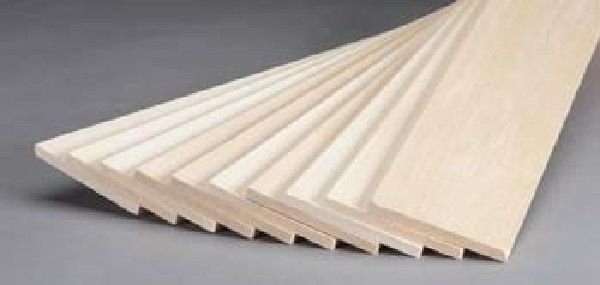
Balsa Wood Market
The Balsa Wood industry is projected to grow from 0.1802 in 2025 to 0.3228 by 2035, exhibiting a compound annual growth rate (CAGR) of 6.0 during 2025 - 2035.
Lightweight yet powerful, the Balsa Wood Market lifts innovation to new heights—fueling industries that rely on strength, sustainability, and unmatched performance.”
NY, UNITED STATES, December 8, 2025 /EINPresswire.com/ -- The Balsa Wood Market has gained increasing attention due to the material’s remarkable properties and versatile applications. Known as one of the lightest commercial woods in the world, balsa wood boasts an exceptional strength-to-weight ratio, making it a preferred material across industries such as aerospace, marine, transportation, wind energy, and arts and crafts. Its natural buoyancy and ease of machining have helped balsa stand out as a sustainable and high-performance material. As global trends shift toward lightweight materials and renewable alternatives, the market for balsa wood continues to experience steady and promising growth.— Market Research Future
Market Overview and Material Advantages
Balsa wood primarily comes from fast-growing trees harvested in regions with warm, humid climates, often reaching maturity in just a few years. This rapid growth cycle positions it as an environmentally responsible choice compared to other hardwoods that require decades to mature.
The global Balsa Wood Market was valued at USD 0.17 billion in 2024. It is expected to expand from USD 0.1802 billion in 2025 to USD 0.3228 billion by 2035, reflecting a steady compound annual growth rate (CAGR) of 6.0% throughout the forecast period of 2025–2035.
A core reason behind the expansion of the Balsa Wood Market is its impressive mechanical profile. Despite being ultralight, balsa wood provides high compressive and tensile strength. This combination makes it ideal for structural applications that require lightweight support materials. Its cellular structure allows engineers to use it as a core material in composite panels, boosting rigidity without adding significant weight.
Additionally, balsa is highly workable—it can be cut, sanded, glued, and shaped with minimal effort, which expands its use in both industrial and hobbyist applications. From model aircraft to insulation panels, its adaptability continues to fuel demand across various sectors.
Get Free Sample Report for Detailed Market Insights: https://www.marketresearchfuture.com/sample_request/4473
Rising Demand in Wind Energy Applications
One of the most influential drivers of the Balsa Wood Market is the booming wind energy industry. Wind turbine blades often rely on strong yet lightweight core materials, and balsa wood has long been a preferred choice. Its natural strength supports blade stability, while its low weight helps maximize rotational efficiency.
As nations continue to invest heavily in renewable energy infrastructure, wind turbine installations are increasing at a rapid pace. This upsurge directly contributes to higher demand for balsa wood, especially in large-scale wind farms. Composite manufacturers increasingly look for reliable, consistent, and high-quality balsa to meet production demands, positioning the material as a strategic resource in the clean energy transition.
Growing Usage in Aerospace and Marine Sectors
The aerospace and marine industries have been significant contributors to the growth of the Balsa Wood Market. In aerospace, engineers seek materials that reduce overall aircraft weight to improve fuel efficiency, flight range, and performance. Balsa wood is widely used in aircraft interiors, cabin components, and composite structures.
In the marine sector, balsa has long been valued for its buoyancy and durability. Boatbuilding relies on strong, lightweight core materials for hulls, decks, and partitions, and balsa offers excellent resistance to shearing forces. Its natural properties help manufacturers maintain vessel stability while reducing fuel consumption. As recreational boating and commercial marine activities expand globally, demand from this segment continues to rise.
Expanding Role in Construction and Industrial Applications
Beyond traditional industries, balsa wood is entering new sectors due to advancements in composite engineering. In the construction sector, lightweight sandwich panels featuring balsa cores are used for insulation, wall cladding, and structural reinforcement. These panels enhance building energy efficiency and reduce overall material weight.
Industrial manufacturers are also embracing balsa wood for packaging, tooling, acoustic insulation, and vibration control. Its sound-absorbing properties are useful in modern architecture and transportation systems where noise reduction is a priority. As industries adopt eco-friendly materials, balsa wood’s renewable nature aligns well with sustainability targets and green building certifications.
Buy Now & Get Exclusive Discount on this Report: https://www.marketresearchfuture.com/checkout?currency=one_user-USD&report_id=4473
Arts, Crafts, and DIY Segment Remains Strong
While industrial applications dominate, the arts and crafts sector continues to represent an important portion of the Balsa Wood Market. Hobbyists value balsa wood for model building, architectural prototypes, decorative crafts, and educational projects. Its softness and ease of shaping make it accessible to beginners while still offering excellent performance for professional artisans.
Growing interest in DIY culture, custom woodworking, and educational STEM activities supports steady demand in this segment. Online craft markets and workshop trends further contribute to the popularity of balsa wood for creative projects.
Challenges Affecting the Balsa Wood Market
Despite its positive outlook, the Balsa Wood Market faces several challenges. One major concern is supply chain fluctuation. Since the majority of the world’s balsa supply comes from limited geographic regions, weather patterns, deforestation pressures, and farming practices can impact availability and pricing.
Another challenge comes from the competition with synthetic core materials such as PVC foam, PET foam, and honeycomb composites. These engineered materials offer predictable properties and consistent supply, prompting some industries to explore alternatives. However, many high-performance applications still prefer balsa due to its natural strength and sustainability.
Quality control also plays an important role. The moisture content, density, and uniformity of balsa wood must meet strict standards, especially for aerospace and wind turbine applications. Ensuring consistency across batches requires careful cultivation, harvesting, and processing.
Sustainability and Reforestation Efforts
Sustainability remains central to the future of the Balsa Wood Market. Many producers are adopting responsible forestry practices, including reforestation, controlled harvesting, and community-based farming systems. By supporting sustainable cultivation, suppliers aim to preserve natural ecosystems while meeting global demand.
Certification programs and eco-labeling help manufacturers demonstrate their commitment to sustainable sourcing. As environmental regulations tighten worldwide, industries increasingly prefer materials with transparent and ethical supply chains. These trends reinforce balsa wood’s position as an environmentally friendly alternative to synthetic options.
Browse the Complete Report: https://www.marketresearchfuture.com/reports/balsa-wood-market-4473
Future Outlook and Emerging Opportunities
The future of the Balsa Wood Market appears promising, with multiple growth avenues emerging across industries. The continued expansion of the renewable energy sector, especially offshore wind projects, is expected to drive substantial demand. Growing investment in lightweight materials for electric vehicles, drones, and aerospace innovation further creates opportunities for balsa-based composites.
Technological advancements in resin infusion, lamination, and CNC machining are enhancing the performance and usability of balsa wood panels. These innovations help manufacturers create stronger and more efficient products tailored to industrial needs.
Additionally, rising global interest in sustainability, green materials, and biodegradable alternatives is expected to elevate balsa wood’s value proposition in the years ahead.
Discover more Research Reports on Chemical Industry, by Market Research Future:
Bioplastics Market https://www.marketresearchfuture.com/reports/bioplastic-market-1964
Recycled Polypropylene Market https://www.marketresearchfuture.com/reports/recycled-polypropylene-market-7502
Ethanol Market https://www.marketresearchfuture.com/reports/ethanol-market-7304
India Tile Adhesive Market https://www.marketresearchfuture.com/reports/india-tile-adhesive-market-4655
Ceramic Membranes Market https://www.marketresearchfuture.com/reports/ceramic-membranes-market-11910
Market Research Future
Market Research Future
+16282580071 ext.
email us here
Visit us on social media:
LinkedIn
Facebook
X
Legal Disclaimer:
EIN Presswire provides this news content "as is" without warranty of any kind. We do not accept any responsibility or liability for the accuracy, content, images, videos, licenses, completeness, legality, or reliability of the information contained in this article. If you have any complaints or copyright issues related to this article, kindly contact the author above.
